
An American Original That Still Outsells the Rest: Why the Acton Stacker® Remains the Gold Standard for Flexible Spaces
Walk any trade show floor, open any contract furniture catalog, or sit through a product pitch, and you’ll hear the same promises repeated again and again: innovative, versatile, space-saving, designed for today’s needs.
Yet here’s the uncomfortable truth many furniture dealers already know: most “new” seating solutions are simply variations on old ideas, often missing the very details that matter most once the chairs hit the floor of a real facility.
So, let’s start with a question that cuts through the noise:
How is it possible that, in a world of nearly 7 billion people, filled with brilliant engineers, cutting-edge materials, and endless design iterations, there is still only one chair that stacks, gangs, and has arms?
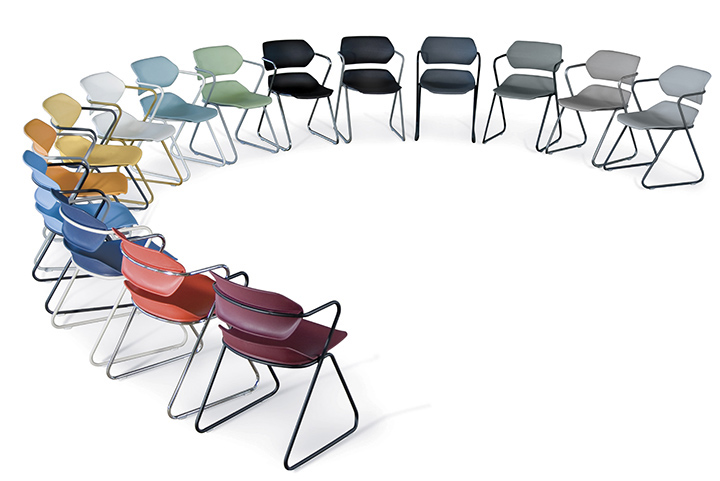
That chair is the Acton Stacker®, and nearly 50 years after its original design, it remains unmatched in the market.
For furniture dealers and manufacturer reps serving churches, theaters, educational institutions, and multi-use public spaces, the Acton Stacker® is more than a product. It’s a proof point. A conversation starter. And often, the final answer to a problem clients have struggled to solve for years.
This article explores why the Acton Stacker® continues to matter, how its history informs its performance, and why PS Furniture’s stewardship of this American classic makes it one of the smartest solutions you can confidently sell into today’s flexible environments.
The Problem Modern Facilities Can’t Ignore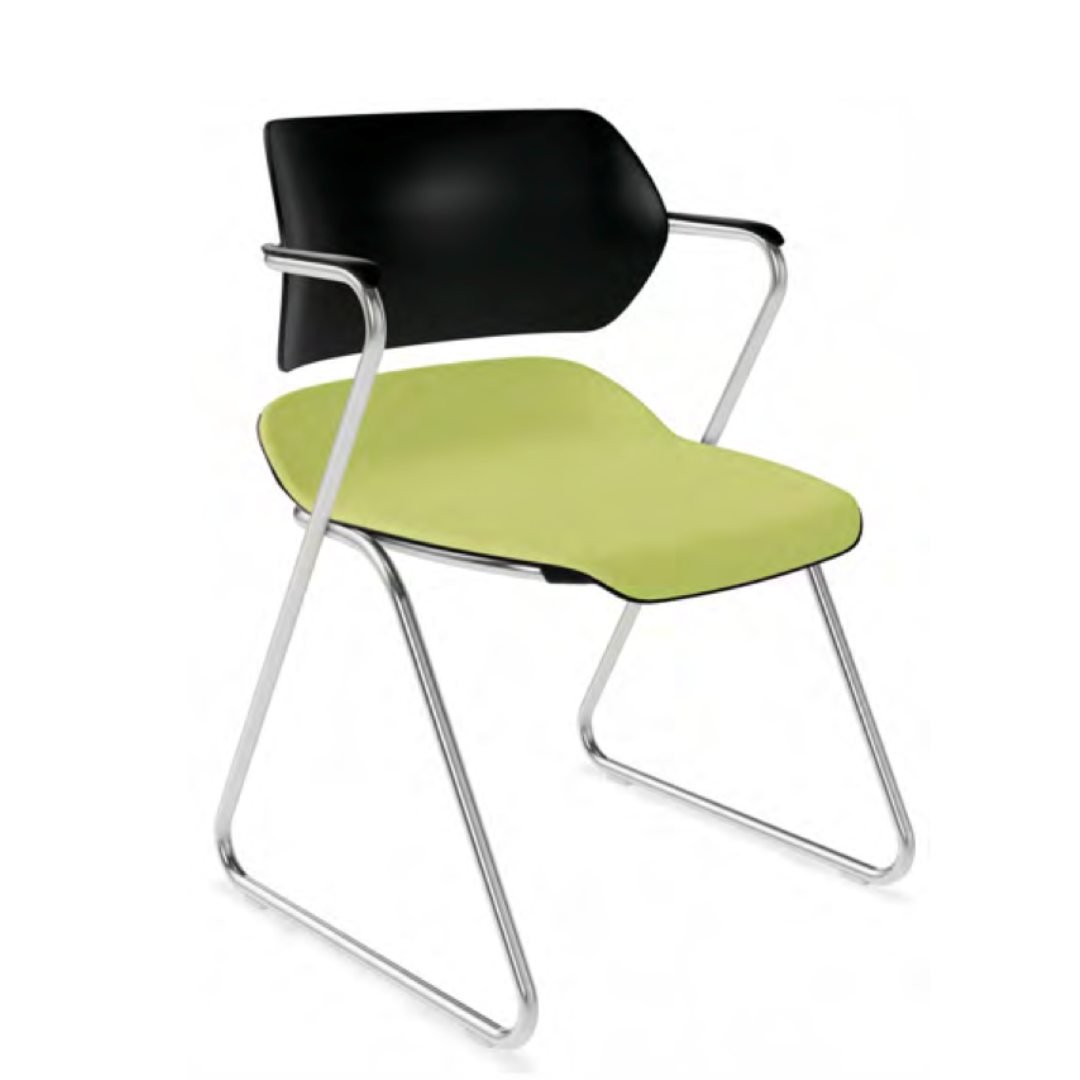
Today’s facilities are under pressure from every angle.
Spaces must:
- Transition quickly from one setup to another
- Store large quantities of seating efficiently
- Meet fire and safety codes with proper ganging
- Provide comfort for multi-hour events
- Preserve personal space and dignity for seated guests
And increasingly, they must do all of this without compromising aesthetics or ease of use.
Most stacking chairs solve one or two of these challenges. Very few solve them all.
Armless chairs stack easily…but sacrifice comfort and personal boundaries.
Chairs with arms offer comfort…but refuse to stack or gang effectively.
Ganging solutions exist…but are often fragile, awkward, or visually intrusive.
This is the gap where facilities struggle and where the Acton Stacker® quietly continues to dominate.
A Brief History: The Birth of an American Classic
The story of the Acton Stacker® begins in the early 1970s, during the formative years of modern seating design.
American designer Hugh Acton created the Acton Stacker® for American Seating at a time when the concept of compact stacking chairs was still new. Just a decade earlier, designer David Rowland had introduced the iconic 40/4 chair, widely recognized as the first true compact stacking chair.
But Hugh Acton took the idea further.
Rather than designing solely for density or visual minimalism, Acton focused on human comfort, dignity, and usability in real-world environments. His design solved a problem others hadn’t yet addressed: how to create a chair that could stack compactly without removing arms and still gang securely in rows.
It’s worth pausing on that fact.
Nearly half a century later, the Acton Stacker® remains the only chair in the market that stacks and gangs with arms.
That’s not marketing hyperbole. It’s a design achievement that has withstood decades of competition, trends, and technological advancement.
Why the Acton Stacker® Is Still Relevant Today
Facilities built in the 2020s have very different expectations than those built in the 1970s. And yet, the Acton Stacker® continues to be specified in newly designed theaters, large congregation churches, performance venues, and multipurpose spaces.
Why?
Because great design ages well when it solves fundamental human and operational needs.
There are three overriding reasons the Acton Stacker® continues to be preferred and why PS Furniture has ensured its legacy continues.
- Remarkable, Multi-Hour Comfort (That People Actually Notice)
Comfort is one of the most underestimated selling points in contract seating…until it’s missing.
Anyone who has sat through a long service, performance, or conference knows the feeling: constant shifting, sore backs, numb legs, and the subtle frustration that distracts from the experience itself.
Hugh Acton’s mid-century modern design addressed comfort with uncommon intention:
- A concave, lumbar-supporting seat back that naturally cradles the spine
- A waterfall seat edge that reduces pressure behind the knees
- A seat that rises slightly at the back, increasing support during long sits
The result is a chair that feels good with or without upholstery. This isn’t accidental, it’s ergonomic intelligence built into the shell itself.
For dealers, this translates into a powerful, experiential selling point:
Clients don’t just see the Acton Stacker®. They feel it.
And once they sit in it, comparisons become very easy.
- Perfectly Compact Stacking and Storage (Designed for Real Buildings)
Flexible spaces live or die by how quickly and efficiently they can be reconfigured.
The Acton Stacker® excels here in ways many chairs claim but few deliver:
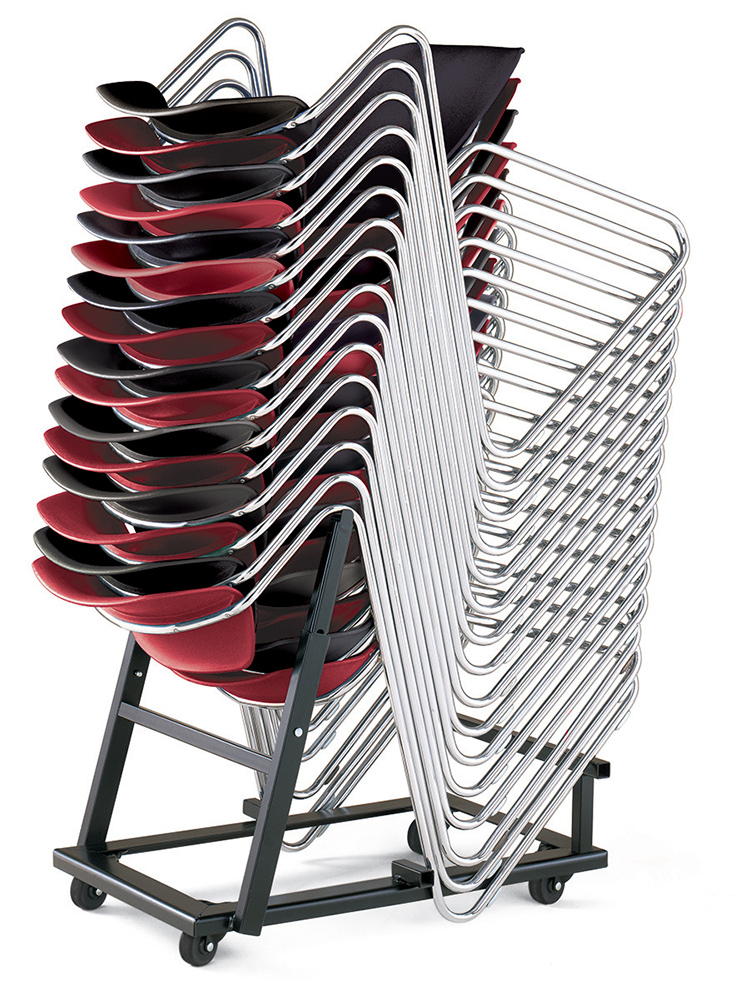
- Stacks up to 26 chairs high without upholstery
- Stacks 16 chairs high with upholstery
- Stacks 5–6 chairs high on the floor
- Uses a specially designed cart that fits through standard doors and passenger elevators
- Occupies just 32.5 cubic feet when stacked 26 high
This matters enormously to facility managers and operations teams. Storage rooms aren’t infinite. Elevators aren’t oversized. Setup crews need efficiency, not complexity.
When you position the Acton Stacker® as a solution for real-world constraints, it becomes clear why it continues to outperform newer alternatives.
- Integral Ganging That Works and Lasts
Ganging is no longer optional. Fire and safety codes mandate it in many applications, particularly for rows of seating in public venues.
But anyone who has dealt with after-market ganging knows the pain:
- Loose connectors
- Broken clips
- Bulky hardware
- Frustrated staff
The Acton Stacker® eliminates these issues with integral steel ganging fittings built directly into the chair.
They are:
- Easy to attach
- Durable and long-lasting
- Low-profile and visually unobtrusive
Facility managers love them because they don’t fail. Designers appreciate them because they don’t distract. And dealers value them because they reduce callbacks and complaints.
The Only Chair That Truly Respects Personal Space
One of the most overlooked aspects of seating design is dignity.
When people gather, whether for worship, performance, or community, they want to feel connected, but not crowded. Arms provide subtle but important separation. They give users a place to rest their elbows and define personal space without physical barriers.
The Acton Stacker® is uniquely positioned here. It allows facilities to:
- Seat people comfortably in rows
- Maintain personal boundaries
- Stack and store efficiently afterward
Again, no other chair in the market accomplishes all three simultaneously.
PS Furniture and the Future of Flexible Spaces
Today, PS Furniture proudly brings American manufacturing back to this American classic.
As a brand focused on furniture for flexible spaces, PS Furniture understands that adaptability, durability, and comfort are not trends – they’re requirements.
By continuing the legacy of the Acton Stacker®, PS Furniture honors Hugh Acton’s original vision while delivering the quality and consistency today’s facilities demand.
For dealers and reps, this creates a rare opportunity:
a proven design with modern manufacturing support and a clear, differentiated story.
How to Sell the Acton Stacker® with Confidence
When you’re in front of a client, remember this:
You’re not selling nostalgia.
You’re selling a solution that has outperformed every alternative for 50 years.
Position the Acton Stacker® as:
- The only chair that stacks and gangs with arms
- A seating solution designed around human comfort and dignity
- A proven choice for flexible, high-use environments
- An American classic, manufactured for today’s facilities
In a crowded marketplace, clarity wins. And few products offer the clarity of the Acton Stacker®.
Final Thought: Some Designs Don’t Need Reinventing
It’s remarkable that a chair designed by a farm kid from Nebraska nearly half a century ago still stands alone in its category.
But perhaps that’s the lesson.
When a design truly understands people, space, and function, it doesn’t become obsolete, it becomes timeless.
The Acton Stacker® isn’t just relevant. It’s essential.
And for furniture dealers who value credibility, performance, and long-term relationships, it remains one of the smartest products you can put on the floor. And stand behind with confidence.